From Software Monoliths to Living Systems: Rethinking Technology in Education
by: Shaun McNicholas
Why institutions are breaking under legacy platforms—and what comes next
For over 15 years working in the education space, I’ve seen the same pattern repeat itself.
Institutions invest heavily in software that promises transformation—student systems, learning platforms, administrative tools—all designed to modernize operations and improve outcomes.
But over time, something very different happens.
Instead of enabling progress, these systems begin to resist it.
The Slow Collapse of Institutional Software
Most education platforms weren’t designed to evolve—they were designed to deploy.
They arrive as complete systems, built for a moment in time, with rigid structures and predefined workflows. And while they may solve immediate problems, they introduce long-term constraints:
- Aging infrastructure that becomes increasingly difficult to maintain
- Security vulnerabilities that require constant patching
- Limited integration across departments and systems
- Rigid workflows that force users to adapt to the software
At first, these issues are manageable.
But over time, they compound.
And eventually, the system becomes the bottleneck.
When Software Fails, People Compensate
What’s most interesting—and most overlooked—is what happens next.
The system doesn’t collapse outright.
Instead, the burden shifts.
Administrative staff become the glue holding everything together:
- Exporting and reformatting data
- Manually reconciling disconnected systems
- Printing documents to move information between processes
- Creating workarounds that were never part of the original design
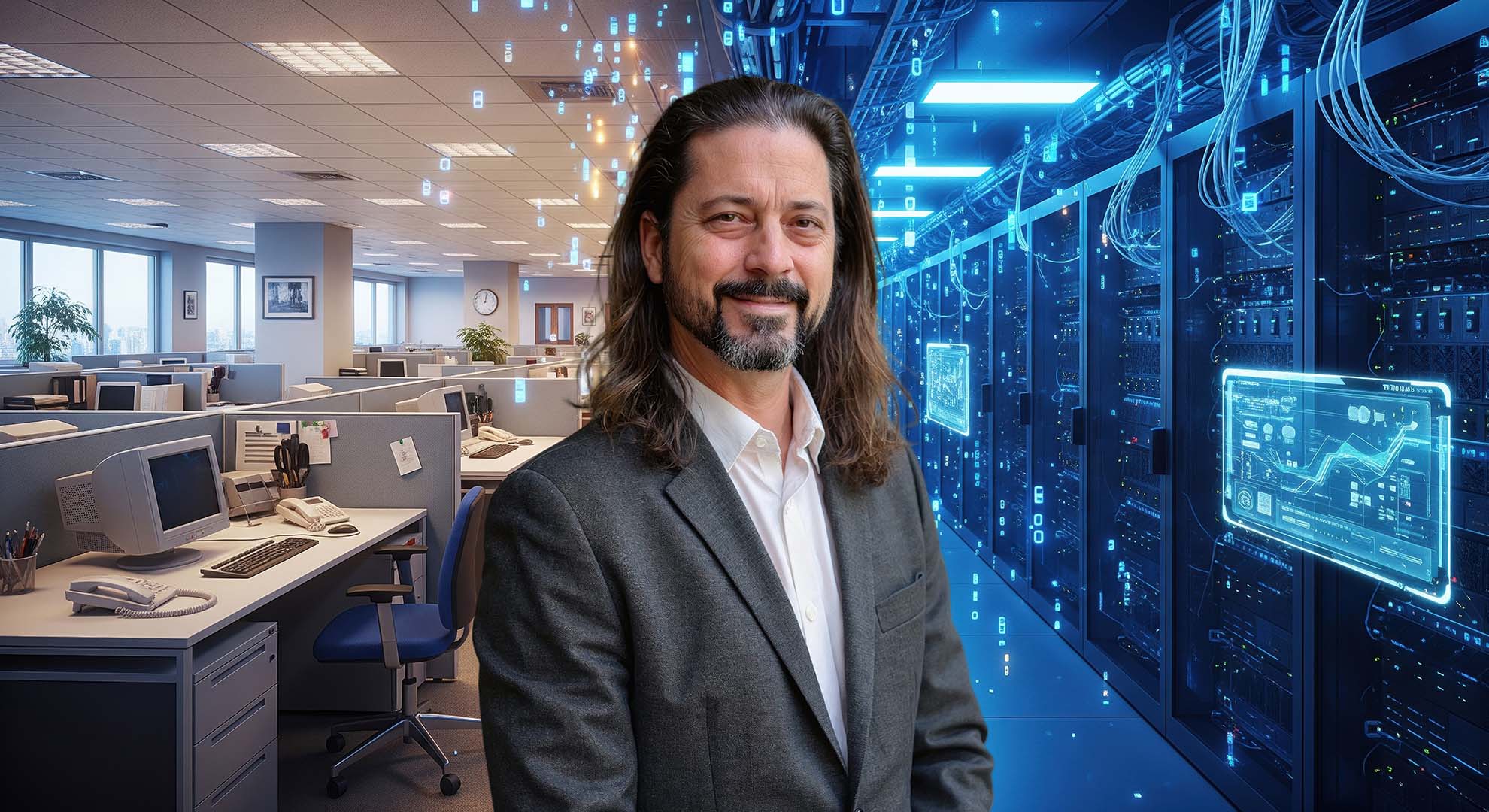
Inside institutions that are teaching AI, automation, and modern software development…
the operational backbone is often held together by spreadsheets, emails, and paper.
That’s not a technology gap.
That’s a system design failure.
The Real Problem: Static Systems in a Dynamic World
Education is one of the most dynamic environments there is:
- Student expectations change constantly
- Technology evolves at an exponential pace
- New tools and capabilities emerge every year
But the systems supporting these institutions?
They change slowly—if at all.
This creates a widening gap between:
- What institutions need to do
- What their systems are capable of supporting
And that gap is where inefficiency, risk, and frustration live.
Why SaaS Isn’t the Answer Anymore
For the last decade, SaaS was positioned as the solution.
And to a degree, it was.
It moved institutions away from on-premise limitations and into more flexible environments.
But SaaS introduced a new problem:
Standardization at the expense of adaptability.
SaaS platforms:
- Require institutions to conform to predefined workflows
- Release updates on vendor timelines—not institutional needs
- Limit customization to protect scalability
- Still create silos between systems
In other words, SaaS improved access…
but didn’t solve alignment.
A Shift Is Happening: From Products to Systems
What we’re seeing now is a fundamental shift in how technology is built and deployed.
We’re moving from:
- Software as a product
→ to systems as an evolving capability
This shift is being driven by:
- Automation frameworks
- AI-assisted development
- Real-time data processing
- Feedback-driven system design
And most importantly—
the recognition that no two organizations operate the same way.
Introducing a Different Model: IteraOS
This is exactly the problem IteraOS was designed to solve.
Not as another platform layered on top of existing problems.
But as a fundamentally different approach to how systems are created and evolve.
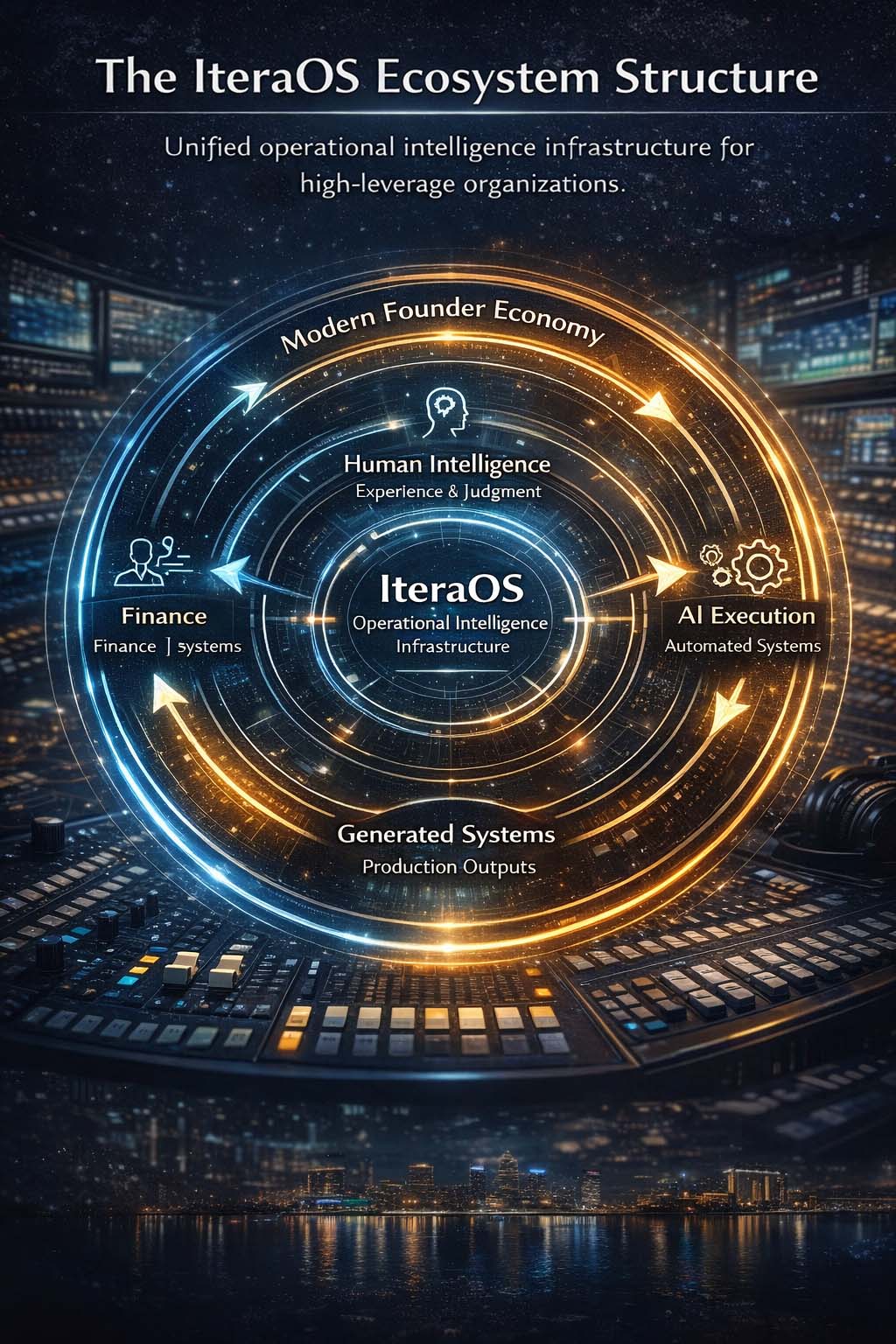
IteraOS operates less like software—and more like a living system.
What Makes IteraOS Different
Instead of forcing institutions to adapt to software…
IteraOS adapts to the institution.
It functions like an embedded, continuously operating system that:
- Learns how the organization actually works
- Integrates across existing tools and workflows
- Builds automation around real behavior—not assumptions
- Evolves through continuous feedback loops
It’s not deployed once.
It’s continuously refined.
Security and Stability by Design
One of the biggest risks in education environments is the layering of new systems on top of aging infrastructure.
IteraOS approaches this differently:
- Local-first architecture where appropriate
- Controlled data environments with secure access layers
- Intelligent automation that reduces human error
- Incremental evolution instead of disruptive overhauls
Security isn’t an afterthought.
It’s part of the system’s foundation.
From Administrative Burden to Intelligent Support
Imagine replacing manual administrative work with a system that:
- Automatically associates financial transactions with institutional records
- Connects communications, documents, and workflows in real time
- Anticipates needs based on historical patterns
- Suggests actions instead of requiring constant oversight
Not as a separate tool.
But as part of the system itself.
That’s the shift.
The Bigger Idea: Iterative Intelligence in Practice
At the core of IteraOS is a broader concept I’ve been developing:
Iterative Intelligence
The idea that:
- Human expertise
- Automated systems
- Continuous feedback
work together in a loop—constantly improving the system over time.
This is what transforms technology from static infrastructure into a dynamic, evolving capability.
What This Means for Education
Institutions don’t need more software.
They need systems that:
- Adapt as quickly as their environment changes
- Reduce operational friction instead of adding to it
- Enhance human decision-making instead of replacing it
- Continuously improve instead of slowly degrading
Because the reality is:
The future of education won’t be defined by the tools institutions adopt…
but by how intelligently those systems evolve.

Where This Is Going
We’re entering a phase where small, highly capable teams—equipped with the right systems—can outperform large institutions weighed down by outdated infrastructure.
Not because they have better people.
But because they have better systems.
Final Thought
For years, institutions have been asking:
“What software should we implement next?”
The better question now is:
“What kind of system are we building—and can it evolve with us?”
Call to Action
If you’re evaluating how your institution is approaching automation, integration, or AI—
this is the moment to rethink the foundation.
Not just the tools.
But the system itself.
PSMDesign works with organizations to design and implement adaptive, intelligent systems built for continuous evolution.
If you’re ready to move beyond static software and into systems that actually grow with you—
let’s start that conversation.